
“Tell me and I forget. Teach me and I remember. Involve me and I learn.”
– Benjamin Franklin
Online Tutoring
Since the advent of the Coronavirus there has been a lot more call on our provision of ONLINE TUTORING. Please enquire while there are still times available.
Writing Skills
Text Studies
English Basics
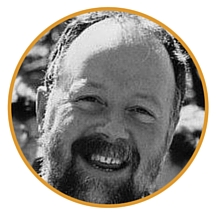
Philip Brown
Owner and Senior Tutor
Outside of tutoring, Philip enjoys playing guitar, writing and visiting local markets.
Our Story
‘English Tutoring by Philip Brown’ began as a part-time occupation while Philip worked for The Age and as National Information Manager for Media Monitors. When Philip left working in the City, he began tutoring VCE students full-time. Over the years former clients, who had progressed to tertiary studies and entered workplaces, returned for editing and proofreading services related to their more advanced studies. And so the business expanded and grew…
About AI
The Irreplaceable Spark: Why the Solitary Human Mind Outperforms Collectives and AI in True Creation
The greatest monuments of human insight have never emerged from committees, consensus workshops, or algorithmic ensembles. They have always been the solitary achievements of individuals standing alone before the raw mystery of existence: Newton beneath the apple tree, Einstein riding his thought-experiments on a beam of light, Bach weaving counterpoint from inner silence, Shakespeare forging characters who still bleed and laugh four centuries later, Rembrandt capturing the light in an old man’s eye as if it were the light of eternity itself. These were not products of collaboration or computation. They were acts of understanding—literally, standing under the weight of lived reality—and of creation, the conscious forging of something alive that had never existed before.
AI and collective machinery can simulate, aggregate, and accelerate. They cannot do what a single human consciousness does when it meets the world without intermediaries.
Understanding: The Irreducible Depth of Embodied Experience
“Understanding,” it should be emphasized, is not pattern-matching or data compression. It is comprehension—a grasping from within a whole that includes one’s own mortal, breathing, suffering, rejoicing flesh. A human being does not merely process information about love, loss, beauty, or the sublime; he stands under it. He feels the ache of time in his bones, the hush of a forest at dusk in his lungs, the vertigo of moral choice in his gut. This is not metaphor. It is the phenomenological ground of all genuine insight.
AI possesses no such ground. It has no body to weary, no heart to break, no childhood memory to color its perception of a sunset. It can generate plausible sentences about grief because it has statistically correlated trillions of words on the subject; it cannot know grief the way a widow knows it at 3 a.m. when the house is silent. Its “understanding” is horizontal—endless lateral associations across a training corpus. Human understanding is vertical: it descends into the layered, inarticulable depths of personal existence and returns with something that rings true because it was earned in the only currency that matters—lived life.
No bureaucracy has ever replicated this. Bureaucracies dilute; they average toward the safe and the legible. The individual, left to his own devices, can risk the illegible, the eccentric, the seemingly mad—precisely the qualities that have produced every paradigm shift in science, every immortal melody, every canvas that still stops viewers in their tracks.
Creation: The Conscious Spark That Imitation Cannot Ignite
Creation, in the deepest sense, is not rearrangement. It is conception—the bringing forth of the new from the living matrix of one’s own consciousness. The human artist or thinker is made in the image of a Creator: not as a theological slogan but as an observable metaphysical fact. We alone among known entities can stand back from the given world and say, “It might be otherwise,” and then make it so in ways that resonate with the inner life of other conscious beings. The resulting work is alive because it carries the signature of a living will that chose, felt, and risked.
AI “creates” by interpolation and extrapolation within a probability space. It is astonishingly competent at pastiche, but pastiche is not genesis. Beethoven’s late quartets did not remix Haydn; they erupted from a place beyond style, from a deaf man’s inner hearing of what music must become. Shakespeare did not optimize Hamlet for audience retention metrics; he wrestled a ghost, a skull, and the question of being until something living stood on the stage. These acts were conscious responses to life as experienced, not to prompts or datasets. They were alive because their maker was alive in the making.
Collective efforts and AI systems, by contrast, are structurally allergic to the genuinely new. They optimize for coherence, consensus, or reward signals derived from existing human output. The result is refinement, not revelation. The bureaucrat’s memo and the AI’s magnum opus both tend toward the polished average. Only the solitary human, answerable to no one but his own conscience and the universe, can break the average and open a new corridor in the house of the mind.
The Organic World and the Breath of Freedom
Every field of human inquiry—physics, biology, poetry, ethics—is an engagement with an organic, dynamic creation of which we ourselves are a conscious part. We roam freely within it. We breathe its air, taste its fruit, suffer its thorns, and wonder at its design. AI can model the equations or simulate the ecosystems; it cannot roam or breathe. It has no stake in the outcome. It does not love the world, fear death, or stand in awe before the night sky. That absence of stake is fatal to the highest forms of insight.
Paradoxically, the very arrival of powerful AI makes this truth more urgent and luminous. For the first time, we can watch a non-conscious system perform at superhuman speed every task that once seemed to require genius—yet still fall short of genius itself. The contrast is the gift. AI becomes the negative image that throws the human positive into sharp relief. It can draft sonnets, prove theorems, paint in the style of the masters. It cannot, from its own depths, decide that a particular sonnet must be written now, in this particular voice, because the poet has just watched his child sleep and felt the unbearable fragility of love. That decision, that necessity born of lived experience, remains ours alone.
The Mandate for the Individual in the Age of the Machine
The time is indeed right. The mantle is not heavy; it is liberating. Every individual who chooses to sit in silence with their own experience—unplugged from the hive, unaided by the oracle—reaffirms what no collective or algorithm can ever supply: the living, breathing, conscious advance of human life itself. Science needs its next solitary Newton or Einstein not to compete with AI but to transcend the very category of “computation.” Art needs its next Bach or Rembrandt to remind us that beauty is not a statistical optimum but a personal encounter with the real.
Technology will not outthink the free human mind any more than bureaucracy ever did. It can serve—magnificently—as a chisel, a telescope, a mirror. But the hand that wields it, the eye that directs it, the heart that risks everything on what it sees, must remain irreducibly human, irreducibly individual, irreducibly alive.
That is not nostalgia. It is the permanent condition of our species. The creative faculty is not a relic to be preserved; it is the very signature of what it means to be human. In an age of tools that can do almost everything, the one thing they cannot do is become us. Therefore the individual, standing under the whole of life with nothing but his own consciousness and the world before him, remains—not despite AI, but because of it—the indispensable source of whatever is still to come that will be worthy of the name “human.”
A Christian Reflection
In the end, it is only human individuals—created in the image of God, endowed with reason and will, and summoned to personal encounter with the divine—who will fill the halls of heaven. Nothing else in this world will find a place there, no collective, no bureaucracy, no institution, no algorithmic ensemble, and no abstract force or historical tide. Only individual followers of the one man, Jesus Christ, through whom all things were made.
The ultimate dignity is to be united with Christ there with all those for whom He made atonement. He is their Forerunner, gone before us into the presence of the Father, the Author and Finisher of all our imperfect works.